Monday, March 2, 2020

A Dragonfly named Martha and a Shark Named Genie

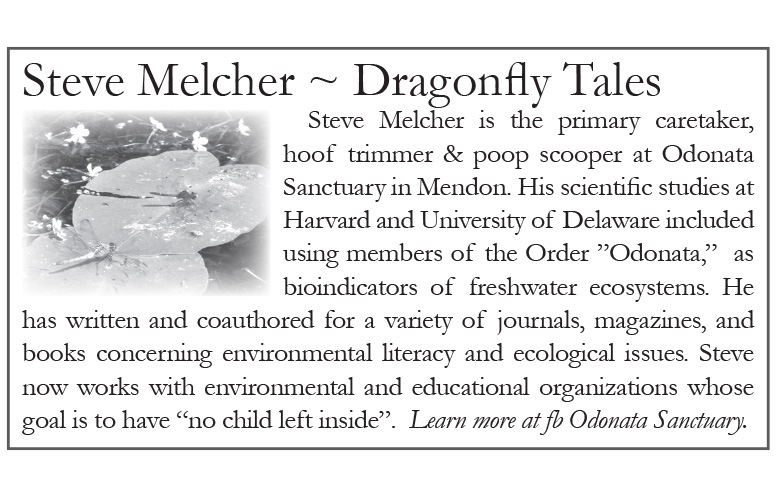
Dragonfly Tales-Mapping Odonata

A Dragonfly named Martha and a Shark Named Genie

  • By Steve Melcher
How do you get a shark named after you? How do you get the nickname ‘Queen of the Deep’? How do you get a spot named after you on the ‘100 Acre’ map of Odonata Sanctuary? You become an activist and do something that is outstanding through your love and passion that contributes to our understanding of the environment. The women in this story created lives that directly impacted the environment in a positive way, making the ride in this spaceship we call Earth a safer, healthier, more pleasant one. All of these women and many more have not only excelled in a particular field of study, but have cared enough to become activists and initiate changes that benefit our peaceful journey through the universe. 

The Dragonfly Lady, Miss Mattie Wadsworth (1862-1943)

An observer and collector, Mattie Wadsworth started out collecting stamps as a young girl. She and her two sisters ran the family farm in Hallowell, Maine at the turn of the last century. Her interests switched to butterflies and beetles and then to her final passion: dragonflies. President of her local ‘Swiss Cross’, a nature club dedicated to the Swiss naturalist, Louis Agassiz, she was  involved in early citizen science efforts and answered the call for dragonfly specimens and data from across the country. Her keen observations and writings were admired by the more established scientists of that time.There are several specimens of insects that she observed and collected that no longer survive in the US. 
Species named in her honor: Celithemis martha (Odonata: Libellulidae) 
Odonata Map: Mattie’s Marsh

The Shark Lady, Eugenie Clark 

I helped Bosco Medved tag sharks in the Delaware and Chesapeake Bays as part of his PhD thesis. (He helped me scrape critters off boat bottoms and beer bottles for my studies.) Bosco’s main advisor was none other than the ‘Shark Lady’ herself, Eugenie Clark. Dr. Clark would come onboard and haul in the nets with the rest of us, while puffing away on a smoking corncob pipe, ‘To keep the mosquitoes at bay’. Clark was the one that discovered that sharks do indeed sleep, dispelling the myth that sharks need to keep swimming to survive. She was an outspoken advocate against the public perception of sharks as mindless man-eating machines and became especially vocal after a 1975 hit movie whose music still sends chills down many backs.  Born in the Big Apple, she says she was first exposed to sharks pressing her nose against the public aquariums in New York. As a Japanese American, she was one of only a handful of female scientists in the male-dominated field of marine biology. She made many discoveries and even helped further develop the crude SCUBA gear of that time. While doing research in the Sea of Cortez, David Doubliet of the National Geographic Society said, “I never thought I’d see her again’, as he watched Genie ride off into the sunset on the back of a fifty foot whale. ‘That was the ride of my life’ she told him after he finally caught up with her. Clark and another early underwater explorer, Sylvia Earle, would become role models and mentors to a generation of women marine biologists.
Species named in her honor: Squalus clarkae, a type of dogfish shark
Odonata Map: Genie’s Shark Tank

Queen of the Deep, Dr. Sylvia Earle

“It’s the ignorance that most people have about why the ocean matters to them. Who cares if the ocean dries up tomorrow? The ocean should and does matter to everyone. Even the people who have never seen the ocean are touched by the ocean with every breath you take, every drop of water you drink.”
Dr. Sylvia Earle aka ‘Her Deepness’ aka ‘The Sturgeon General’ is not only a wicked good swing dancer but holds the record for the deepest solo dive. Time Magazine awarded her the first ‘Hero for the Planet’ in 1998. She was the first woman to serve as Chief Scientist of NOAA and is still ‘Explorer in Residence’ of the National Geographic Society. She helped organize ‘Mission Blue’, a global coalition of over 200 organizations that have cited ‘Hope Spots’ that are in dire need of protection. When the oil was spilled during the Exxon Valdez, Deep Water Horizon and Mega Bora disasters, she was called in as an expert to deal with these catastrophes. I fondly remember discussing ‘Soylent Green’ with her on board ship while eating the chef’s green cookies he had prepared one Tuesday as a joke. The oceans were going to feed the world and algae was going to become a major food source. Little did we know how the tide would turn and how important a plant-based diet would become.
Sylvia has had several species named after her. In 2016 she named a newly discovered fish after President Barack Obama. So not only do you have a chance to get a species named in your honor by another scientist, you can find a new species and name it after someone!
Species name: Tosanoides obama 
Odonata Sanctuary Map: the deep end of Willow Pond is called “The Earle.” 
“Only within the moment of time represented by the present century has one species—man —acquired significant power to alter the nature of his world.”  Rachel Carson, Silent Spring

Mabel Rosalie Barrow Edge

Dedicated New York suffragist, Rosalie Edge was a wealthy socialite who was anything but demure and proper. Edge probably rubbed elbows with Susan B. Anthony in the lecture halls and churches of that time. After the 19th Amendment passed, Edge shifted her efforts to helping the fledgling National Audubon Society. Rosalie actually sued the NAS and made a point of exposing the existing corruption perpetrated by the all- male board of directors. She became aware of the gender-based injustices happening within the National Audubon Society and through lawsuits, pamphlets and public speaking, she successfully flipped the board, replacing them with members more interested in green space than greenbacks. One of the green spaces Edge wanted to preserve became the Hawk Mountain Preserve in Pennsylvania where Joe Taylor, a founding member of the American Birding Association, was president for over 20 years. Odonata Sanctuary resides on land Joe and Helen Taylor purchased to preserve back in the 60’s. The NAS couldn’t come up with the funds to purchase the land so Rosalie bought it and happily ran the hawk migration sanctuary for the rest of her life.
What do Odonata Sanctuary, a wealthy New York City suffragette, Hawk Mountain and Rachel Carson have in common?
Rosalie Edge was a pertinacious and persistent activist. She moved the environmental movement in ways we can still feel today. Rachal Carson communicated with her. asking for hawk migration data that Carson later used in her epic work on DDT: Silent Spring. 
Species name: There is a Red Tailed Hawk at the Virginia Wildlife Center named ‘Rosalie’ after the wildlife advocate
Odonata Sanctuary Map: Rosalie’s Edge (a steep esker along Rowan River)

The Seed Saver, Vandana Shiva

Ecofeminist, writer, and scientist, Vandana Shiva was listed as one of ‘5 Women Who Have Revolutionized the Environmental Movement’ by the ‘Institute of the Environment’ of UConn. I was fortunate to meet her at a conference at the Indian Institute of Science in Bangalore. She is a champion of women in agriculture and local sovereignty and seed saving. In 1991, she started Navdanya with the mission to “protect diversity and integrity of living resources, especially native seed, and the promotion of organic farming and fair trade”. Her work in India is now becoming relevant in the states where small farmers are being discouraged to save their own seeds and buy commercially available seed instead. Many of the seeds are marketed as “Roundup Ready’ to withstand the use of pesticides and herbicides. Farmers, worldwide, are becoming dependent on seeds from companies like Monsanto. When asked what the average person can do to help make a change, Shiva responded, “you are not Atlas carrying the world on your shoulder. It is good to remember that the planet is carrying you.” 
Navdanya means “nine gifts”. This gift or “dana” of Navadhanyas (nine seeds) is the ultimate gift – it is a gift of life, of heritage, and of continuity. 
Odonata Sanctuary Map: Shiva’s Seed Shack

The Pissed Off Mom, Lois Gibbs 

You might think it would be difficult to name a place after the woman who put Love Canal on the map but we managed to find an old dump site that fits the bill. Gibbs tale is a 
story of the power that personal impact has to inspire national activism. As a mother in the small, suburban neighborhood of Love Canal she became the spokesperson for environmental 
and corporate injustice. It was discovered that her son’s elementary school and the entire neighborhood, was built on top of a toxic waste site. She began knocking on doors and creating petitions to bring attention to the imminent danger of the dump site. She created the Love Canal Homeowners Association and after years of confrontations with the New York State Department of Health through grassroots activism she was able to have nearly one thousand families evacuated from Love Canal and start a massive clean up that would become known as the Superfund Program. 
Gibbs founded the Center for Health, Environment and Justice (CHEJ) and was nominated for the Nobel Peace Prize.
Odonata Sanctuary Map: Gibbs Garbage Dump
This is just a sprinkling of women activists. 
*We’re still developing the map here at Odonata Sanctuary. We just added Alison’s Acre, named after local food and farm activist, Alison Clark. The boy’s room has been named after Jane Goodall in honor of her work with chimps. 

Sunday, June 9, 2019

A gaggle of Rochester Poets gather at Odonata Sanctuary to read poems and prose...all about birds and nature.

Tuesday, June 4, 2019

Nature as a place of peaceful reprieve

https://www.owllightnews.com/dragonfly-tales-nature-as-a-place-of-peaceful-reprieve/

Dragonfly Tales: Nature as a place of peaceful reprieve

by Steve Melcher –

“In wildness is the preservation of the world.” 
~Henry David Thoreau
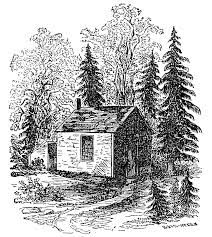
So spoke a true ‘Nature Boy’ over 100 years ago. Henry was someone who was seen as an ‘odd duck’, over educated and underemployed by his town’s folk. He was often seen sauntering through the woods of Lincoln and nearby Walden Pond where he built his now famous ‘cabin in the woods’. He sauntered seemingly with no direct purpose in mind, stopping here and there to observe a recently blooming flower or passing grasshopper. Sauntering is something that has become seldom seen in our swift superficial society. After all ‘saunter’ means to wonder in a slow and relaxed manner without hurry or effort. Here at Odonata Sanctuary, we are planning to build a replica of that cabin and other huts and hideaways of other nature writers.  John Burroughs had his ‘Slabsides, still open to the public in West Park, NY.  ‘The Shack’ is a rebuilt chicken coop along the Wisconsin River where Aldo Leopold crafted his conservation classic, A Sand County Almanac. Anne LaBastille’s wilderness cabin, famous worldwide for where she wrote the Woodswoman series of books, will be taken apart and transferred to The Adirondack Museum.
These special places are not just for nature writers. We all need a space to reconnect to nature…especially children. The IUCN (International Union for Conservation of Nature) World Conservation Congress provided dramatic support for the worldwide movement to re-connect children and nature—for their health and well-being and that of the Earth itself. The proposal states that children have a right to ‘equitable access’ to nature. Amazingly there are children near us in nearby cities that have never seen stars at night and only play on plastic ‘playgrounds’.
The IUCN adopted the resolution, “Child’s Right to Connect with Nature and to a Healthy Environment.” The resolution calls on IUCN’s government members, signers of the Jeju Declaration and NGOs to promote the Rights of the Child. Whew….all this and I just want to get my kid outside and have the ‘stink blown off him’.

Nature Deficit Disorder

What the Union, PCRM (Physicians Committee for Responsible Medicine), educators and many others including child psychologists are saying is that exposure to nature is as necessary to a child’s health as a healthy diet and exercise. A recent Yale study correlated children’s health with exposure  to nature. In the study ‘The Nature of Americans’, Yale professor, Stephen R. Kellert, states: “The relationship of Americans and nature is changing.” Adults and children alike spend evermore time indoors, participation in outdoor activities beyond sports is stagnant or declining, and shifts in social expectations treat engagement with nature as a mere amenity. These trends pose a nationwide problem, since overwhelming evidence shows the physical, psychological, and social well being of humans depends on contact with nature. We’re finding a significant loss of exposure to nature with each generation. To many, Nature, ‘red in tooth and claw’, is to be feared and conquered. That fear has led to a separation from nature that is having dire consequences for our children. Children have an affirmative posture towards life. They have a natural curiosity. They are active beings who want to explore, experiment and build. As adults, all we need to do is provide the space and time for that exploration. We don’t need adults to show young children how to connect with nature. The space becomes the mediator. That space can be a local park or the tree in the backyard. Older children may want a mentor to further their natural curiosity about nature. We hope that our Odonata Sanctuary will become such a place in the near future.
Another finding that is shocking to me is the relationship between a child’s exposure to nature and feelings of loneliness. In their ‘Loneliness Experiment’ the BBC found that Loneliness is felt most intensely by young people. 40% of young people reported feeling lonely ‘often’ or ‘very often’, compared with 27% of the over 75s.  The study concluded that ‘spending time in the natural environment – as a resident or a visitor – improves our mental health and feelings of wellbeing. It can combat loneliness and bind communities together.’ A pediatrician recently told me that loneliness has become as much of a factor of a child’s poor health as obesity and diabetes. 
Children that grow up exposed to nature, connected to nature, will have a greater chance of preserving the nature that they knew as children. If you expose your children to nature and allow those positive experiences to flourish, you create a future citizen who is more likely to preserve that experience through efforts to conserve wild areas. Children need nature as much as nature needs children. We owe our own story of our special place to our children and we owe them the preservation of ‘wildness’, for if ‘In Wildness is the preservation of the World’, who more deserves that preservation than our children: the future guardians of Earth?
You remember that special place you had as a sanctuary. Maybe down by the stream or even on the back step of your porch where you would ‘connect with nature’ while gazing at clouds or watching ants explore the concrete beneath your feet. I remember mine very well.
Give yourself permission to saunter and take a kid with you.

Further Reading:

The ‘Vitamin N Challenge’
Children and Nature Network (C&NN…not CNN) has created the ‘Vitamin N Challenge’ to bring together ideas for parents and practitioners to give their kids a healthy dose ofvitamin N. There is even a book titled Vitamin N, which presents over 500 nature-oriented actions and activities.  Vitamin N The Essential Guide to a Nature-Rich Life: 500 Ways to Enrich Your Family’s Health & Happiness by Richard Louv
The Walden Project: I’ll be writing a whole article on this wonderful endeavor, but for now check out: https://www.walden.org

Thursday, May 9, 2019

Monarchs of the Sky

Dragonfly Tales: Monarch Butterfly

It’s a bird, It’s a plane! 

No, it’s the Magnificent Mystical Marvelous 

Migrating Monarch Butterfly!

by Steve Melcher –
In this age of Marvel comic book heroes like Spider-Man and Thor, a real life critter with amazing superpowers is the Monarch Butterfly – Danaus plexippus. The generation that we see in the North, goes through a transformation that rivals that of the Hulk. This last generation, actually referred to as the ‘Super Generation’, will fly from as far North  as Maine and Manitoba and return to its winter woodland retreat in the mountains of Mexico. That same butterfly will rest for a bit, and when the weather conditions are right,  fly across the border into Texas, lay eggs to begin a new generation that starts the mystical migration cycle again. Scientists still are unsure how the ‘Super Generation’ knows how to make its way back to the same small area of oyamel fir trees in the state of Michoacan in Mexico. In one experiment, monarchs were captured in Kansas, shipped to Washington D.C. and released. They immediately flew due south, many ending up in Florida.  Those that were held in captivity for just a few days headed back to Mexico when released. The navigation mechanism might be related to sunrise and sunset observations allowing the monarchs to ‘reset’ their compasses. 
I remember when we didn’t know where the monarchs ended up after their epic migration. The locals knew of the magnificent gathering of monarchs in the remote areas of Michoacan mountains, but associated the event with the Día de Muertos (Day of the Dead) and thought these must be the souls of ancestors.  It wasn’t until the early 1970’s that a scientist, Dr. Fred Urquhart, after pursuing migrating monarchs for nearly 40 years, proposed that these were the same monarchs found up north. He told the world in the August, 1976 issue of National Geographic magazine. However, he did not reveal the actual location of the butterfly colonies, even to other scientists, until he was assured of their protection. The hypothesis was that these might be the same butterflies seen in the US and Canada that had flown south.  While working on the Delmarva Peninsula with the Army Corp of Engineers in the 70’s, I worked with several colleges across the country tagging monarchs. The year 1975 was a ‘peak year’ for monarchs on the barrier islands, with dozens of orange butterfly beauties coating every goldenrod on the beach. Imagine the disbelief of finding your tag number from a butterfly caught and tagged on Wallops Island, Virginia, on a fir tree thousands of miles away in the mountains of Mexico. That small area, west of the heavily populated Mexico City, is still under pressure for development.  The Mexican government has done a Herculean job of saving the areas where the monarchs overwinter despite the ongoing illegal logging and other development pressures. Thirty years ago the population was estimated to be over a billion. Today, it is less than 50 million. There have been ups and downs over the years. A  cold spell decimated a portion of the population a few years ago. Storms along the migration route and climate change related temperature fluctuations have all contributed to population fluxes. The greatest impact has been due to habitat loss.
The monarchs we see in the Finger Lakes of New York in the spring and summer might be the great-great-great-great-great grandkids of the monarch we saw leave for Mexico last fall. When the monarchs of the ‘Super Generation’ leave Mexico in the spring, they lay their eggs across the border in Texas. This first generation will fly further north, repeat the protocol of mating and then finding the proper plant to lay her eggs. The eggs of this first generation will hatch, eat, pupate and the adults will fly even further north, around 50 to 100 miles per day, searching for milkweed to lay their eggs. Along the way they are searching for nectar plants, for food and energy,  and milkweed, to lay the next generation of eggs.  Unfortunately, milkweed is considered a noxious weed by farmers and homeowners and is heavily sprayed with glyphosates and other herbicides. The spray not only kills the food sources and nurseries of Monarchs but affects many other species of pollinators as well. Farmers of everything from apples to almonds are now using a large portion of their budget to bring in bees and other pollinators to ensure a healthy crop. We can help the monarchs and the farmers by providing ‘Way Stations’ for monarchs and other pollinators by planting native milkweed and nectar plants. I want to stress the use of ‘native plants’. Native plants are adapted to local environmental conditions and migrating pollinators have adapted to these native plants. I also want to stress planting food and nursery plants. The infamous ‘Butterfly Bush’ (Buddleia sp.) has become an invasive species in many parts of the US and provides only food and not a place for the monarch to lay her eggs.
Life Cycle

“Butterflies…flowers that fly and all but sing.” ~ Robert Frost

Females lay tiny white eggs usually on the underside of a milkweed leaf. The outer covering of the egg is hard and hydrophobic (sheds water) which keeps the larva from drying out or from being eaten by beetles, ants and other insects. The newly hatched caterpillar’s first meal is it’s egg case!  After finishing that easy meal it feeds on its host plant and will eat only milkweed leaves for its entire caterpillar stage of about 10 days. Milkweed contains glycosides that are poisonous to predators. Another protective feature of the caterpillar is a pair of long filaments on each end of its body. One pair are actual antennae and the other pair are false antennae confusing a potential predator as to which end is which.
The black, yellow and white caterpillar molts several times as it grows, eating its shed skin after every molt.  The caterpillar will eventually attach itself to the underside of a leaf or branch in an upside down J shape. This is the final molt which transforms the caterpillar into a luscious lime  green jewel-like chrysalis, rimmed with shining gold jewels. During the next 2 weeks, the caterpillar becomes completely reorganized. The pupal or chrysalis stage may look sedentary but there is a magnificent transformation occurring.  Near the end of this stage the chrysalis becomes dark on the inside with a clear shell, revealing the formation of the butterfly within.
The butterfly splits open the chrysalis shell and emerges with damp, crumpled and limp wings. Still hanging upside down, it will pump fluid through the veins of its ever expanding wings. A few hours late, the wings have fully expanded and dried, and if the conditions are right, the monarch will take its first flight and become a ‘flower that flies and all but sings’.    

Monarch Waystations

Santuario de la Mariposa de Mendon: Monarch Waystation #10223

Part of our mission at Odonata Sanctuary is to create and maintain a Monarch Waystation to contribute to monarch conservation and help assure the continuation of the monarch migration in North America. We not only have several areas dedicated to néctar plants but also encourage the propagation of native milkweeds. We currently mow 30 acres every other year to encourage ground nesting birds like Meadowlarks and Dickcissels. While I mow I keep an eye out for patches of milkweed and purposely mow around them encouraging the patch to expand. You don’t need 30 acres to create a sanctuary or waystation for monarchs. Most Monarch Waystations in project Monarch Watch are home gardeners like you. The Xerces Society, in partnership with the Monarch Joint Venture and National Wildlife Federation, has developed a list of native plants appropriate for our particular region.